
What should I expect at my first visit?
You can expect a warm welcome from our friendly front desk team as soon as you arrive at our office. A team member will take photos and a panorex, after which Dr. Saylor will review these records and discuss treatment options based on you or your child’s needs. Toward the end of your visit, our treatment coordinator will go over the cost of treatment, your insurance coverage, and available payment plan options.
If treatment is not recommended at your consultation, Dr. Saylor may suggest check-up visits every 6–9 months.
What’s the best age to see the orthodontist?
The American Association of Orthodontists recommends that children see an orthodontist as early as age seven.
How much does orthodontic treatment cost and how long is treatment?
The cost of treatment varies based on your needs, as well as insurance benefits. Dr. Saylor may recommend traditional braces, clear aligners, or other specialized appliances such as an expander. These devices help guide the teeth into proper alignment.
Throughout your treatment, you’ll visit our office every four to eight weeks for regular checkups and adjustments. Each adjustment allows the appliances to continue guiding your teeth toward their ideal position.
After your teeth have moved into place, you’ll wear a retainer every night to ensure they stay in their new position and don’t shift back.
Do you treat children and adults?
Yes! All consultations for children are complimentary.
What type of braces do you offer?
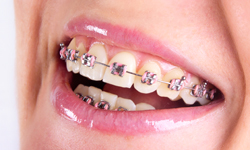 Traditional Metal Braces are the most common type of braces and are more comfortable today than ever before. Made of high-grade stainless steel, metal braces straighten your teeth using metal brackets and archwires. With metal braces, you have the option of adding colored elastics (rubber bands) for a more unique and colorful smile.
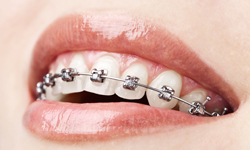 Self-Ligating Braces are made from the same materials as traditional braces. However, self-ligating braces do not require the use of elastics, meaning fewer appointments and less friction being placed on the tooth. Self-ligating braces come with traditional metal, ceramic, or clear brackets. They are the same size as metal braces, but use a specialized clip in place of elastics to help the archwire guide teeth into place. The clip helps reduce the amount of pressure being placed on the tooth, and requires fewer adjustments because there are no elastics to replace.
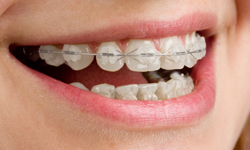 Clear (Ceramic) Braces are made of clear materials and are therefore less visible on your teeth than metal braces. For this reason, ceramic braces are used mainly on older teenagers and adult patients who have cosmetic concerns. While they are visually less prominent, they do require more attention to oral hygiene as ceramic braces are larger and are more brittle than their metal counterparts. For these reasons, ceramic braces tend to be used more on upper front teeth than on lower teeth.
Can I return to work or school the day I receive braces?
Yes. You do not need to take the day off. You may experience mild soreness and tenderness the first few days.
What foods should I avoid with braces?
General rule to follow is to avoid anything, sticky, chewy, hard or crunchy! It is important to avoid these things as they could result in broken brackets, loose wires, or broken appliances that may delay treatment time.
Can I play sports with braces?
Yes, you can still play sports with braces. Feel free to ask our team about mouth guards.
 Website Powered by Sesame 24-7™